
Prime Highlights
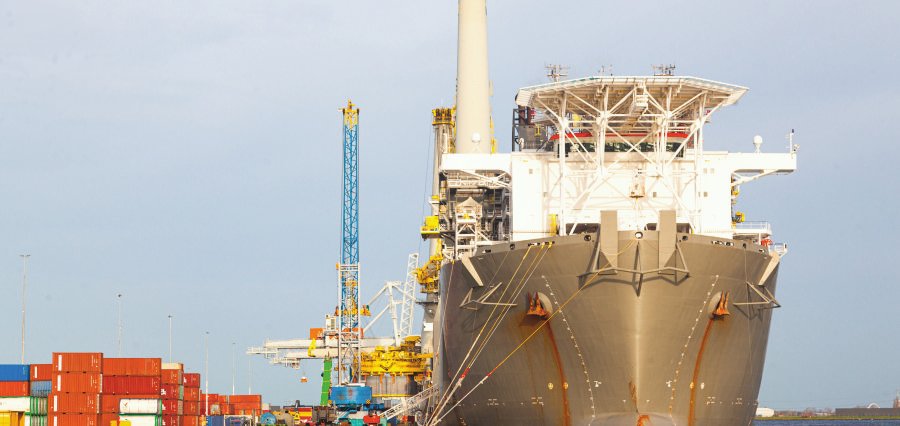
- Damen and Windcat have launched the Windcat Amsterdam, the first Elevation series CSOV to arrive in European waters.
- The vessel can house up to 120 offshore personnel and is expected to cut CO2 emissions by 30% through its hybrid battery-electric propulsion system.
Key Facts
- Windcat is an offshore transport operator providing vessel services for offshore energy projects.
- Damen is a Dutch shipbuilder that developed the Elevation series CSOV in collaboration with Windcat.
Background
Dutch shipbuilder Damen and offshore transport operator Windcat have officially launched the Windcat Amsterdam, marking a significant milestone for the offshore energy sector in Europe. The vessel is the first Commissioning Service Operations Vessel from the Elevation series to arrive in European waters and was built at the Ha Long Shipyard in Vietnam through a joint development between the two companies.
The Windcat Amsterdam was built to provide support for construction work, commissioning activities and maintenance operations at offshore energy sites. The system functions as a floating base, which enables offshore personnel and equipment to access offshore platforms safely and efficiently. The vessel has a capacity to hold 120 passengers who will stay in single and double cabins, while the ship provides a complete gym facility together with entertainment spaces and catering services, which create a comfortable living space for workers on their 30-day offshore assignments.
In terms of sustainability, the ship’s construction prioritized lowering its carbon footprint. It features a hybrid battery-electric propulsion system, four 360-degree rotating thrusters for precise movement, and a fully integrated energy network. The combined technologies will achieve a 30% reduction of CO2 emissions. The ship is currently undergoing preparation to operate using hydrogen fuel because its dual-fuel hydrogen engine will become available after the final regulatory approvals are obtained.
The safety features are just as strong. Even in choppy waters, the ship’s 3D motion-compensated gangway enables crew members to move to offshore installations. The safety features are just as strong. Even in choppy waters, the ship’s 3D motion-compensated gangway enables crew members to move to offshore installations.
Willem van der Wel, Managing Director at Windcat, said introducing the first CSOV to Europe was a proud moment for the company and highlighted its commitment to supporting Europe’s energy transition with future-proof vessels.