
Prime Highlights :
- EU and UK deliver historic Gibraltar deal benefiting 15000 daily travelers.
- Agreement builds new customs union framework boosting regional trade growth.
Key Facts :
- The agreement enters provisional application on July 15, 2026.
- Dual Gibraltar and Schengen checks will run at Gibraltar’s port and airport.
Background :
The European Union and the United Kingdom signed a landmark agreement on Gibraltar, opening the way for free movement of people and goods between Spain and Gibraltar and completing the broader legal framework governing EU UK relations after Brexit.
The deal comes after more than four years of negotiations and fills a gap left by the 2020 EU UK Trade and Cooperation Agreement, which had excluded Gibraltar from its scope.
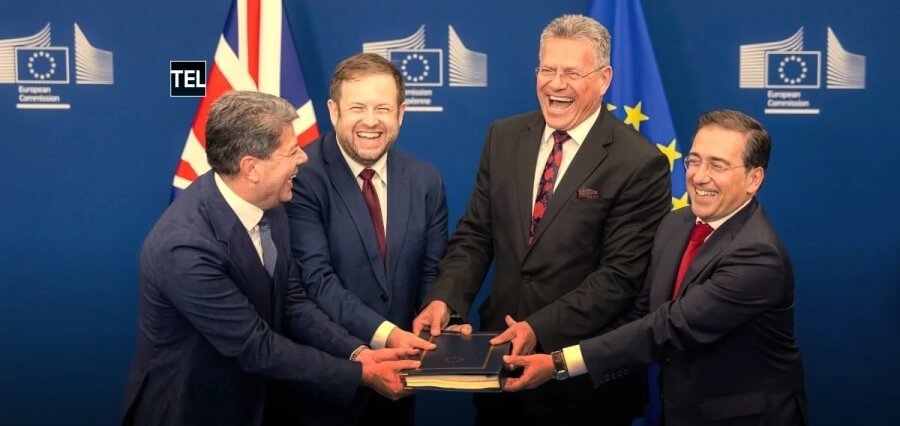
European Commission Trade Commissioner Maros Sefcovic called the signing a truly historic moment. He said the agreement delivers shared prosperity and closer cooperation, benefiting roughly 15000 people who cross between Spain and Gibraltar every day. He described the moment as a special one, comparing it to watching a fence come down.
The agreement sets up dual Gibraltar and Schengen border checks at Gibraltar’s port and airport, run jointly by EU and UK Gibraltar authorities. This new system removes the need for checks at the La Linea crossing point, streamlining daily travel for thousands of commuters and boosting cross-border business activity.
Spain will carry out Schengen checks on behalf of the EU, while UK Gibraltar authorities will continue managing their own checks as before. Both sides also agreed on visa and permit arrangements alongside stronger cooperation between police and law enforcement teams.
On trade, both sides laid the groundwork for a future customs union between the EU and Gibraltar, backed by tighter cooperation between customs authorities and easier movement of goods. Indirect tax rules, including those on tobacco, now align more closely under the deal, helping drive balanced growth across the wider region.
Next, the European Parliament must give consent before the Council concludes the deal. It now moves to the European Parliament for consent before the Council finalizes its conclusion.