
Energy policy sits at the heart of some of the most important decisions governments, businesses, and societies face today. As nations strive to balance economic growth, energy security and climate commitments, the transition toward sustainable energy systems has become both an environmental necessity and an economic imperative. Progress in this field does not occur simply because the science is compelling. Progress takes hold when credible voices translate scientific evidence into arguments that policymakers can act on, businesses can understand, and the public can engage with honestly.
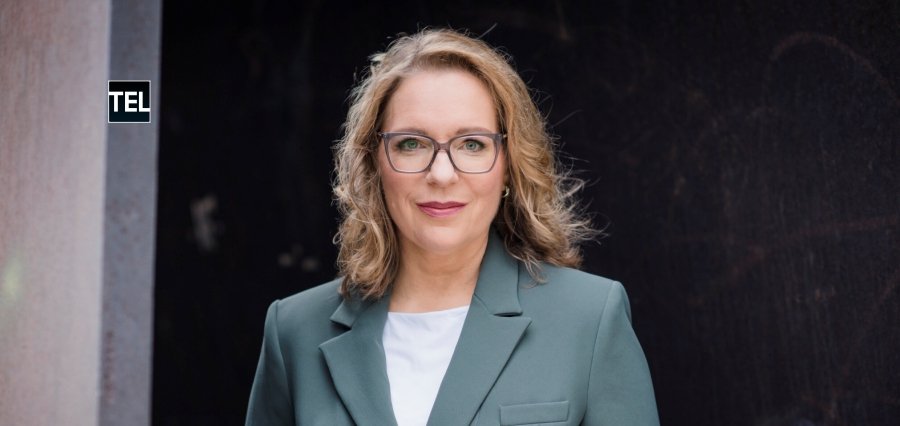
That kind of contribution requires more than academic expertise. It requires patience, clarity and the willingness to stay in difficult conversations long enough to shift them. Prof. Dr. Claudia Kemfert is Professor of Energy Economics and Energy Policy at Leuphana University of Lüneburg and Head of the Department Energy, Transportation, Environment at the German Institute for Economic Research (DIW Berlin). Through research, public engagement, and policy work, she continues to shape how energy transformation is understood and put into practice across Europe and well beyond its borders.
A Career Defined by Energy Economics and Sustainability
An economist by training, Prof. Dr. Claudia Kemfert was fascinated from the beginning by strategic markets and the ways companies behave, governments intervene, expectations shape investment decisions, and economic power influences political choices. This fascination with strategic market behaviour has remained one of the central motivations behind her work from the very beginning. Energy markets particularly captured her attention because they were never purely technical systems. They determined prosperity, dependency, security, innovation, and often revealed remarkably persistent habits within economies and societies.
During the early 1990s, she studied in one of the first academic programmes focused on renewable energy while simultaneously beginning her work on the economic impacts of climate change. These questions immediately appeared inseparable to her: how costly is climate damage, and how can energy systems be transformed quickly enough to avoid it?
Renewable energy emerged as the central answer to both challenges. It reduces fossil dependencies while addressing the climate crisis. Over time, she became increasingly convinced that renewables are not only about environmental protection. Renewables are equally about competitiveness, innovation, energy security, and economic resilience. That insight has guided her career ever since. Looking back, she believes the central question of her career has remained remarkably consistent: how can societies move from defending yesterday’s technologies to scaling tomorrow’s solutions?
Bridging Science, Policy, and Society
Today, Prof. Dr. Claudia Kemfert describes her role as a translator between science, policy, and society. Whether through research, teaching, books, policy advice, or public engagement, every aspect of her work serves the same purpose of turning scientific evidence into better decisions.
Years of research, policy engagement, and public debate have shown her that evidence alone rarely changes the world. “Evidence creates impact when it is understandable, accessible, and connected to real decisions.” Energy and climate debates are frequently shaped by short-term interests, misinformation, and assumptions that no longer reflect present realities.
Through her work, she contributes independent analysis and economic clarity to discussions that are often dominated by narratives rather than facts. The focus of her work is straightforward: demonstrating that the energy transition is not primarily an environmental project but one of the largest economic transformation projects of our time. She believes that renewable energy, efficiency, electrification, and innovation strengthen competitiveness, resilience, and long-term prosperity.
Leadership Through Collaboration and Coordination
She has always viewed energy transitions less as technological challenges and more as coordination challenges. The technologies already exist, capital exists, knowledge exists, and public support is often stronger than assumed. The challenge lies in bringing these elements together at the speed and scale necessary to create meaningful progress.
Her work sits at the intersection of research, business, policy, and public debate, allowing scientific evidence to enter the spaces where energy futures are ultimately decided. She emphasises that “The renewable energy sector requires implementation: grids, storage, flexibility, investment, innovation, skilled workers, and public participation.”
As she puts it: “Energy transitions are coordination challenges rather than technology challenges.”
Leadership, in her view, means creating clarity, building trust in evidence, and helping institutions, businesses, policymakers, and citizens align around common goals. Successful transformation occurs when these forces move in the same direction.
Persistence in the Face of Resistance
Throughout her career, Prof. Dr. Claudia Kemfert has learned that energy debates are rarely about energy alone. They are about business models, economic interests, political influence, and the distribution of power. For many years, renewable energy technologies were described as too expensive, too unreliable, or simply unrealistic.
As technologies improved and costs fell, many of those arguments disappeared. Yet new objections frequently emerged as older criticisms lost credibility. Misinformation remains one of the greatest challenges facing climate and energy policy today, with scientific findings sometimes selectively interpreted or deliberately distorted.
Public visibility inevitably attracts criticism, yet criticism has never been a reason for her to step back. Climate economics has taught her patience. Reality eventually catches up with evidence. Many developments once dismissed as unrealistic have become mainstream, reinforcing one lesson that continues to guide her work: persistence matters.
Staying Ahead of Change in a Dynamic Sector
After decades of analysing energy markets, climate economics, and transformation pathways, she believes curiosity and scepticism belong together. New technologies and policy proposals should be judged according to their economic substance rather than their headline appeal.
Scalability, affordability, resilience, speed of emission reductions, and actual system value are the criteria that matter most. Equally important is determining whether a proposal solves a real problem or merely postpones difficult decisions.
Remaining closely connected to international research networks, interdisciplinary teams, policymakers, companies, and practitioners allows her to distinguish genuine innovation from temporary hype. Scientific rigour provides the foundation while practical experience reveals where implementation succeeds and where it struggles. She notes, “The most valuable insights often emerge where research meets reality.”
Communicating Complexity with Clarity
For Prof. Dr. Claudia Kemfert, effective communication accelerates transformation. Throughout her career, Kemfert has contributed extensively to research on climate economics, energy security, renewable energy, and economic transformation. Yet she believes research changes societies only when its findings reach people in a form they can use. Energy policy affects everyone, yet public discussions are often clouded by misconceptions and unnecessary complexity. People do not require oversimplification. They require clarity.
Through books, lectures, interviews, podcasts, and public engagement, she makes complex evidence understandable and relevant for everyday decisions. Her recent German book, Kurzschluss – How We Are Squandering Our Energy Future (“Short Circuit”), explores why societies often delay obvious solutions and how a secure, affordable, and renewable energy future can be achieved more quickly.
“Communication transforms knowledge into orientation and helps distinguish genuine solutions from attractive distractions.” One of the more surprising aspects of her career has been repeatedly explaining that neither physics nor economics changes simply because a political slogan becomes popular.
Inspiring Innovation, Shaping Future Leaders
Teaching and mentoring remain among the most rewarding aspects of Prof. Dr. Claudia Kemfert’s professional journey. She encourages students and young professionals to question assumptions, including her own, because innovation often begins when individuals refuse to accept that existing systems are the only realistic option.
Climate action extends beyond technical disciplines and includes economics, politics, psychology, business, technology, and social change. Connecting these perspectives creates opportunities for new ideas and fresh approaches to emerge.
Younger generations possess an important advantage because they are often less attached to existing structures and more willing to design new ones. Her role, as she sees it, is to provide evidence, analytical tools, confidence, and intellectual freedom.
Milestones That Reflect Long-Term Impact
Awards and recognitions are valuable to Prof. Dr. Claudia Kemfert as they bring visibility to climate economics, renewable energy, and transformation research. They signal that these issues have moved beyond specialist discussions and into broader public conversations.
The milestones that matter most to her, however, are often less formal. Research influencing policy decisions, concepts moving from academic journals into implementation, students building careers in sustainability, and ideas once considered unrealistic becoming mainstream represent achievements that carry deeper significance.
Looking back, she is particularly proud that a body of work spanning over 600 scientific publications, numerous books, policy reports, and public contributions has pursued the same goal: connecting rigorous research with practical solutions.
Maintaining Balance While Driving Change
Climate and energy policy generate a constant flow of interviews, debates, publications, and urgent issues. She believes that maintaining balance therefore requires conscious attention. Family, friends, movement, and time away from public debate provide her with energy and perspective.
Nature plays an important role in helping her recharge and reflect. Walking through forests or near water often provides clarity that cannot always be found at a desk. Nature serves not only as a place of recovery but also as a reminder of why this work matters.
She also draws motivation from progress itself. New technologies, effective policies, innovative businesses, and talented students continually demonstrate that change is possible, even during challenging periods.
A Vision for Europe’s Green Future
Looking ahead, Prof. Dr. Claudia Kemfert is inspired by the vision of a climate-neutral Europe that is prosperous, innovative, socially inclusive, and energy secure. Renewable energy, electrification, storage, efficiency, smart grids, and digital solutions already provide the foundation for a resilient and affordable energy system. The decisive questions are speed, implementation, and political determination.
Throughout her career, she has consistently argued that climate protection and economic prosperity strengthen one another. Today, that perspective is increasingly shared across business, politics, and society. According to her, “Renewable energy is far more than an energy technology. It is a freedom project, a peace project, and one of the greatest economic opportunities of our time.”
Coming from northwest Germany, where strong winds are part of everyday life, Prof. Dr. Claudia Kemfert learned early that wind is energy. Over the years, another lesson became equally important to her: headwind is energy, too. It sharpens arguments, strengthens persistence, and keeps progress moving forward. In her view, Europe already has the technologies, the knowledge, the innovative capacity, and the people. What matters now is the determination to act.